Understanding Cord Blood
How cord blood changed transplant medicine, and the limits families should know.
Cord blood is one of the most familiar names in stem cell medicine, and also one of the most misunderstood. It is commonly introduced to expectant parents as a kind of insurance policy for the future, stored at birth and available later if needed. In practice, cord blood is a specific medical product with a defined role, a documented history, and real limits that shape what it can and cannot do.
What Is Cord Blood?
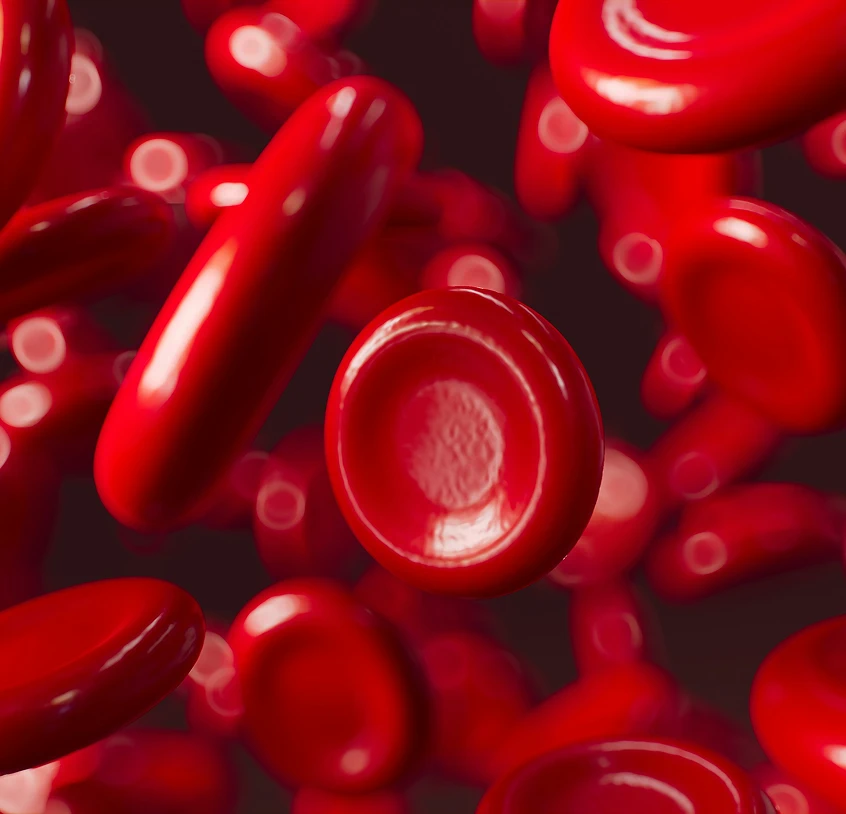
Cord blood is the blood left in the umbilical cord and placenta after a baby is born. For most of modern medicine this blood was simply discarded. Researchers later found that it contains stem cells, the building block cells that go on to make red blood cells, white blood cells, and platelets.
Collection is safe and quick. After the cord is clamped and cut, the remaining blood is drawn into a sterile bag. The process does not affect the mother or the baby. The blood is then sent to a lab, tested, and frozen for later use. Families can keep it in a private bank for their own use or donate it to a public bank where any matching patient can receive it.
A typical cord blood collection is small, usually only about two to four ounces. That puts a natural ceiling on how many stem cells are inside a single unit.
How It All Started
Cord blood as a treatment begins with one child. In October of 1988, a five year old boy named Matthew Farrow traveled to Paris for care. He had Fanconi anemia, an inherited disease that slowly shuts down the body's ability to make healthy blood. Without treatment, most children with the disease did not survive into adulthood.
At a hospital called Hôpital Saint Louis, a physician named Eliane Gluckman tried something that had never been done in a person. She infused Matthew with stem cells collected from his newborn sister's umbilical cord. The cells had been stored and shipped by an American researcher, Dr. Hal Broxmeyer, whose laboratory work suggested cord blood could serve as a stem cell source. Matthew survived, and the case was published in The New England Journal of Medicine the following year.
That single case opened a door. If a small amount of cord blood could rebuild a child's blood and immune system, then cord blood could help other patients too.
What Cord Blood Has Done for Patients
In the years after Matthew's case, cord blood became a real option for patients who needed a stem cell transplant but could not find a matched bone marrow donor. It is now used as a standard treatment for more than 80 conditions, including leukemia, lymphoma, severe aplastic anemia, sickle cell disease, and some inherited metabolic diseases.
Several cord blood products are used in hospitals, among them HEMACORD, ALLOCORD, Ducord, and CLEVECORD. Omisirge, a newer cord blood therapy introduced in 2023, helps blood cancer patients recover their immune systems more quickly after transplant. What began as a single risky case in Paris had become a routine part of cancer and blood disorder care. For many families, that has been a real lifeline.
Autism is a separate story. Over the last decade, Duke University ran the largest clinical program testing cord blood as a treatment for autism spectrum disorder. The Phase II randomized trial led by Dr. Geraldine Dawson, published in The Journal of Pediatrics in 2020, enrolled 180 children and compared a single cord blood infusion to a placebo. The trial did not meet its primary endpoint. There was no statistically significant improvement in core autism symptoms for the cord blood group overall. Subgroup analyses within that trial suggested modest signals in children without intellectual disability, but the headline result for autism as a whole was that cord blood did not produce the broad benefit families were hoping for.
The practical challenges stack on top of that result. A single banked unit for one child usually carries well under a million stem cells, which is small compared to the cell doses used in most cellular therapy programs, and that unit can only be used once. Most children do not have a matched sibling unit available, public bank units require HLA matching, and a child's own cord blood cannot be used in any condition driven by a gene already present at birth. For families looking specifically at autism care, cord blood has been studied, and the strongest trial to date did not show it worked for the general autism population.
Limits a Patient Should Weigh
The collection window only opens once. Cord blood can be collected at exactly one moment, during the minutes after delivery. Families who did not bank at birth cannot go back later, and what was collected is all that will ever exist. A patient considering cord blood as an adult is limited to what was stored for them years earlier or what is available in a public bank.
A patient's own cord blood usually cannot treat their own inherited disease. Conditions like sickle cell disease, thalassemia, and Fanconi anemia are caused by genes that are already present in the baby's cord blood. A transplant meant to replace diseased cells would simply reintroduce the same mutation. The American Academy of Pediatrics and the American College of Obstetricians and Gynecologists both note this restriction, which rules out many of the scenarios families imagine when they first hear about private banking.
One unit is often not enough for adults and larger children. Transplant centers typically require a minimum cell dose based on the patient's weight. Many adults and older children cannot meet that threshold with a single cord blood unit, so physicians turn to double unit transplants, which combine two cord blood units from different donors. A patient's options narrow significantly once cell dose is taken into account.
Cord blood is a one time resource. When a banked unit is thawed and infused, it is gone. There is no way to go back and draw a second dose from the same source. A patient whose condition calls for repeated treatment over time cannot rely on cord blood to cover more than a single event.
Recovery after a cord blood transplant tends to be slower. Because the stem cell numbers are lower than in bone marrow or peripheral blood transplants, patients often take longer to engraft and longer to rebuild their immune system. That translates to longer hospital stays, a higher risk of infection during recovery, and a greater chance that the transplant does not succeed at all. One study in Biology of Blood and Marrow Transplantation found that cord blood units with lower cell viability were very unlikely to engraft.
Most privately banked units are never used. The AAP has estimated the lifetime chance that a child will use their own stored cord blood at somewhere between 1 in 400 and 1 in 200,000. Private banking typically costs over a thousand dollars up front plus an annual storage fee, which a patient's family pays regardless of whether the unit is ever needed.
A New Frontier: Neuro Free
For families looking at cellular therapy as part of autism care, one of the newer developments in the United States is Neuro Free. It is the only U.S. based patented cellular therapy developed specifically for autism spectrum disorder, aimed at improving brain function and reducing neurological inflammation in pediatric and young patients with autism. Treatment is available for ages 2 to 22, with most patients treated between 2 and 20.
Neuro Free was founded in 2016 by physicians who had watched families travel overseas in search of stem cell options they could not find at home. Those trips were often expensive, emotionally difficult, and carried out with limited medical oversight. The program was built to offer that pathway inside a physician led setting in the United States.
A treatment cycle begins with tissue donated by the mother and collected by a plastic surgeon. The harvest is then developed through a patented process carried out inside an FDA registered laboratory, with the patent and the laboratory held by separate entities. On treatment day, the cells are delivered to the child through an IV infusion that runs for about two and a half hours. Many children report feeling sleepy during the infusion, there are no known side effects, and noticeable changes are typically reported within a few hours of treatment.
Several points set the Neuro Free program apart:
- Safer harvest location. The cells are drawn from soft tissue on the stomach, low back, or thighs. The site is chosen for donor comfort and a low risk profile, without the deeper, more invasive harvest sites used in other pathways.
- Cells taken from their natural source. The program works from the perivascular fraction, the layer along the outside of blood vessels where mesenchymal stem cells naturally reside.
- Repeatable treatment. The full harvest is processed and stored at negative 80 degrees Celsius, and doses are released on request. A child's care plan can include multiple scheduled infusions rather than a single, one time event.
- Documented cell counts. Each product is released with recorded numbers for the treating clinic, including live cell viability typically reported between 95 and 100 percent.
- Multiple delivery formats. The program is designed for both IV infusions and injections, so treatment can be matched to the child's needs rather than to a fixed format.
Sources
- Gluckman, E., et al. "Hematopoietic Reconstitution in a Patient with Fanconi's Anemia by Means of Umbilical Cord Blood from an HLA Identical Sibling." New England Journal of Medicine, 1989.
- American College of Obstetricians and Gynecologists. "Umbilical Cord Blood Banking." Committee Opinion, 2019.
- American Academy of Pediatrics. "Cord Blood Banking for Potential Future Transplantation." Pediatrics, 2017.
- Ballen, K. K., Gluckman, E., Broxmeyer, H. E. "Umbilical Cord Blood Transplantation: The First 25 Years and Beyond." Blood, 2013.
- Purtill, D., et al. "Cord Blood Units with Low CD34+ Cell Viability Have a Low Probability of Engraftment After Double Unit Transplantation." Biology of Blood and Marrow Transplantation.
- Dawson, G., et al. "A Phase II Randomized Clinical Trial of the Safety and Efficacy of Intravenous Umbilical Cord Blood Infusion for Treatment of Children with Autism Spectrum Disorder." The Journal of Pediatrics, 2020.